The Complexity of Market Entry
What stops a sophisticated investor from moving capital into Indonesia's tech sector on day one? Rarely a lack of conviction. More often, it is the hidden friction nobody mentions in the pitch deck.
Emerging market trading carries a quiet tax. Security vulnerabilities on public networks, delayed access to settled funds, and onboarding processes that splinter across three different departments — each adds drag. Investors expecting the smoothness of a consumer app collide with the reality of regulated capital markets.
Kresna Securities approached this differently. The architecture team prioritized a unified brokerage model after observing that fragmented systems caused reconciliation errors between digital front-ends and legacy back-office clearing. When the customer-facing portal and the settlement engine speak different languages, trades fall through the cracks. A single entity that bridges digital convenience and institutional-grade security is not a luxury here. It is the precondition for trust.
The stakes sharpen under the T+2 settlement cycle. Compliance is non-negotiable, and a unified model keeps the front-end promise aligned with the back-office obligation.
Streamlining the Onboarding Process
Account opening runs on two channels, and that duality is deliberate.
The first path remains human. A traditional sales representative walks the investor through documentation, mandates, and the institutional formalities that still require a face. The second is Kresna Online, the digital portal that lets global and local investors initiate accounts without a physical visit. For a fund manager in Singapore eyeing Indonesian fintech, the digital contact route collapses what used to be a week of couriered paperwork into a structured online sequence.
Speed has limits, though. An early plan envisioned a fully automated electronic verification pipeline. It was rejected — local regulatory frameworks mandate physical wet signatures for specific institutional accounts, and no amount of clever software waives that requirement.
Case analysis suggests institutional onboarding most often stalls not on creditworthiness, but on missing wet signatures on physical mandates.
Timing matters too. Verification submitted within the 10:00 AM to 3:00 PM local processing window routes for same-day handling. Miss it, and the clock resets to the next business day. Rigorous identity verification at this stage protects both the firm and the investor; it is the gate everyone passes through before a single trade executes.
Why the dual channel survives
Pure digital onboarding sounds cleaner on paper. In practice, the institutional segment — the venture funds and corporate treasuries that move serious capital, still anchors itself to wet ink. Keeping both channels open means Kresna serves the retail trader and the institutional mandate without forcing either into the wrong process.
Executing Trades with Digital Precision
The Kresna Direct platform was built around a single architectural decision: login and trade execution are not the same event.
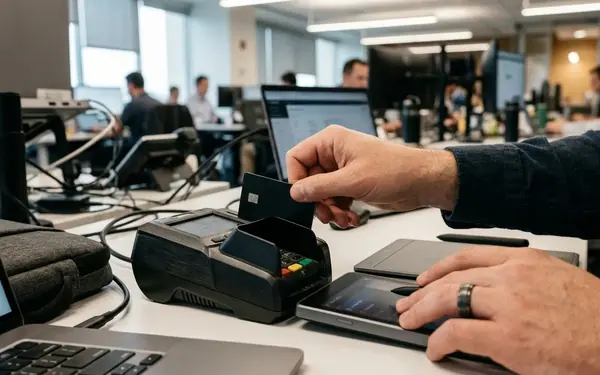
Security architects decoupled login authentication from trade execution, mandating a secondary credential layer to compartmentalize the risks associated with session hijacking on public networks. Logging in proves who you are. Executing a trade requires proving it again.
That second proof is PIN Trading — a 6-digit alphanumeric execution credential entered at the moment of transaction. It is mandatory, not optional. A compromised session on airport Wi-Fi might expose a portfolio view, but without the execution PIN, an intruder cannot move a single share.
The platform reinforces this with a 3-minute session timeout for idle execution windows. Walk away mid-order and the window closes. For shareholders and financial analysts operating in high-stakes conditions, this compartmentalization is the difference between an inconvenience and a catastrophe.
Navigating Fund Disbursement
Withdrawing capital is where many digital brokerages quietly cut corners. Kresna does the opposite.
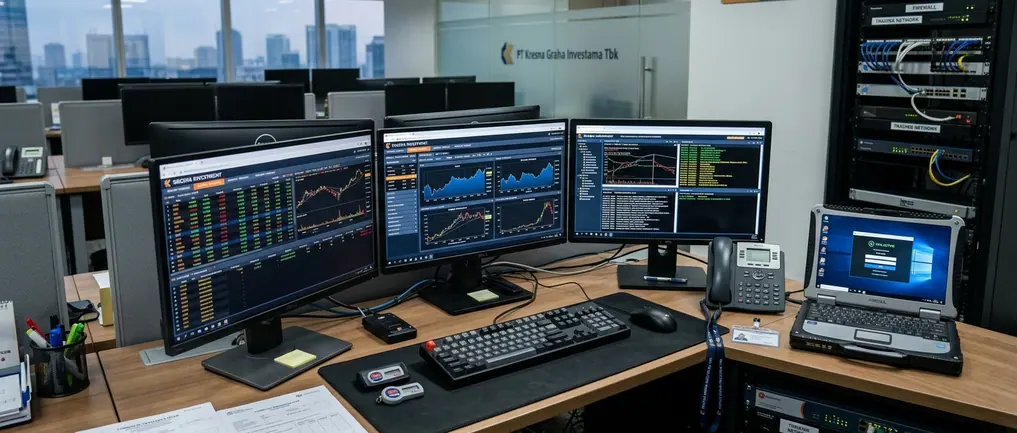
Operations managers structured the disbursement workflow as a strict maker-checker protocol. The customer service officer (CSO) can stage a withdrawal but cannot release it. Final authorization is physical, handled separately. This separation of duties means no single person controls a fund movement end to end.
The choreography runs like this:
- The investor submits a disbursement request, often coordinated through their sales representative.
- The CSO validates the request and stages it in the system — the "maker" step.
- The Finance Accounting Division performs final authorization, the "checker" step that confirms accuracy and compliance before any funds leave.
Timing governs the outcome. There is an 11:30 AM local cut-off for same-day fund transfers. A request that lands at 11:15 AM clears today; one that arrives at 11:45 AM shifts to next-day processing. In professional practice, disbursement timelines move from same-day to next-day on exactly this submission boundary, a small detail that materially affects an investor's liquidity planning.
The Finance Accounting Division's gatekeeping role
This division is the last line. It does not originate transfers; it verifies them. By concentrating final authorization in accounting rather than customer service, Kresna ensures that the people closest to the client never hold unilateral power over the money. That structural friction is intentional, and it is what makes the system auditable.
Understanding Platform Limitations
No digital brokerage is frictionless, and pretending otherwise erodes trust faster than any outage.
Purely digital trading environments wobble under extreme volatility. Execution delays appear precisely when markets move fastest — the moment investors most want speed. Kresna treats this as a known constraint rather than a defect to paper over.
The CSO's authority is similarly bounded. A CSO can stage and process within defined parameters, but the role stops well short of the automated systems and the accounting division's authorization power. This is by design.
Risk management committees deliberately maintained manual oversight protocols for customer service officers rather than deploying fully automated circuit breakers. The reasoning: human intervention should remain present at the points where money actually moves.
Risk Factor: Automated fund disbursement protocols are suspended during market-wide trading halts triggered by the local exchange. When that happens, clearing reverts to manual handling by the Finance Accounting Division. Investors trading through a halt should expect their withdrawals to wait for human clearing rather than instant settlement.
This is the honest trade-off. Full automation would be faster on a calm day and dangerous on a chaotic one. Kresna chose resilience over raw speed — a defensible call, though one that assumes its manual teams can scale during the rare days when everything happens at once.
Strategic Positioning for Investors
A structured brokerage entity does more than process orders. It gives investors a predictable operational spine in a market known for surprises.
Executive planners aligned the settlement infrastructure specifically with the liquidity cycles of venture-backed tech startups, bridging the operational gap between private funding rounds and public-market execution. For an investor moving between a Series B position and a listed equity on the Indonesian capital market, that alignment removes a layer of timing risk that fragmented brokers leave exposed.
Critical Insight: Efficient fund management and secure trading are not separate features — they compound. Secure execution protects principal; disciplined disbursement protects liquidity. Together they let capital flow into Indonesia's tech and financial sectors without the leakage that sinks less structured operations.
The forward view is straightforward. Digital capital markets in Indonesia will keep maturing, and the firms that win will be the ones that treat security and human oversight as partners rather than rivals to automation. Convenience attracts capital. Trust keeps it.
For investors weighing entry, the lesson holds steady: choose infrastructure built for the volatile day, not just the quiet one.